< Back to Win*Star

Features  Common Features
Minimum System Requirements for Win*Star 7.0
| System |
PC running Windows 8, 10, 11
Includes 32 and 64 bit versions of Windows |
| Available Hard-Drive space |
400 Mb free. |
| Other Hardware |
Printer |
| Download file size |
111 Mb |
Chart Types
In all Win*Star Versions

Win*Star 7.0 is the premier chart-calculation program because it easily creates so many chart styles using a variety of techniques. Listed are examples, click any to pop up a sample chart.
Natal Charts
Astrology is, above all, a tool for exploring the self. The natal chart presents the astrological picture of each individual and its interpretation has long been the fundamental tool used to aid in describing personality.
Win*Star 7.0 instantly calculates stunning, precise charts and provides interpretive text that helps you learn this language of the self.
Basic Natal Wheel
 A basic Natal chart using the House Cusp Wheel with unequal houses and Aspect Lines. You can include options for True/Mean node, geocentric latitude, parallax Moon, and day/night Part of Fortune.
Progressed Charts
Progressions are based on the actual orbital motions of the planets along the ecliptic. Progressed charts advance (or retract) the planets' ascendant and midheaven according to several formulae.
Biwheel with Aspects
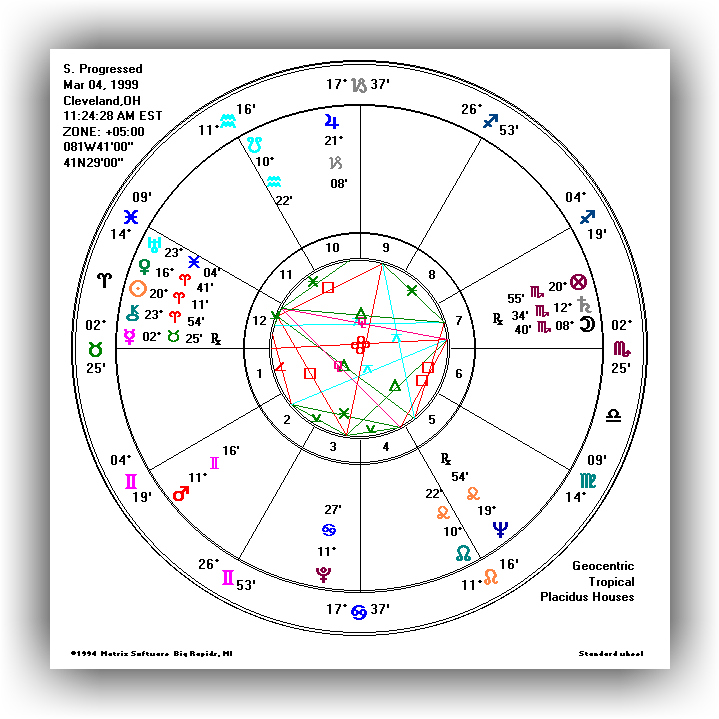 This uses the secondary method where 1 day = 1 year. Thus the positions of the planets 22 days after birth are related to the 22nd year of the person's life.
Daily House Progressed Chart
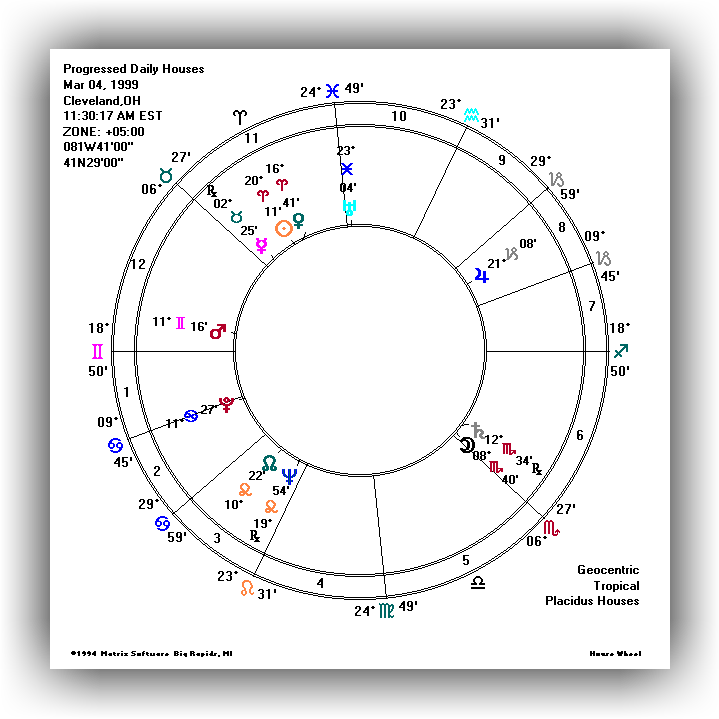 This progressed angle method is used with secondary, tertiary, and minor progressions. The exact time of the progressed chart is used to determine the corresponding RAMC (sidereal time) and this RAMC is then used to derive a set of chart angles using the radix geographic latitude.
[ TOP ]
Directed Charts A few Samples
Directed charts are another predictive tool by which one planet is "directed" to another planet or point. Directed charts add a fixed arc to the natal planets and comparing the directed positions to the radix positions to evaluate the occurrence of aspects.
Directed Chart
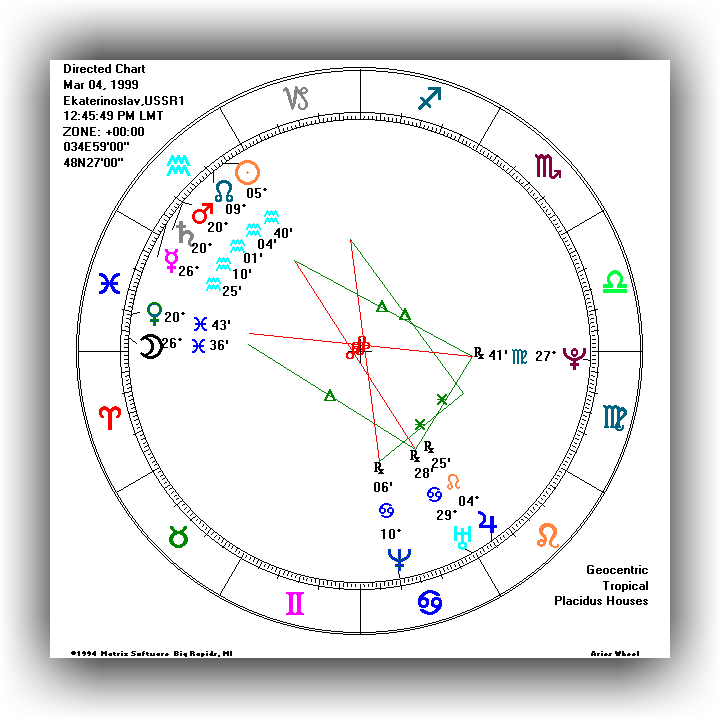 Among contemporary methods of direction, solar arc [one year of life = one day of solar motion] is one of the most popular.
Degree/Year Chart
 With degree-for-a-year arc directions, one degree of arc is represented for each year of life. This arc is then added to all relevant natal positions to find their directed positions.
[ TOP ]
Return Charts A few Samples
Return charts are calculated for the moment that a transiting planet or point returns to its exact natal position. There are several variations or methods of doing return charts and it is possible to calculate multiple return charts at one time without having to re-enter natal or return data. You may request any number of Solar Return charts to be calculated and printed at a single Win*Star session.
Natal Return Wheel
 This option pinpoints when a selected planet was, or will be, in the same position in the zodiac that it occupied in the natal chart.
Return Transit Wheel
 The transit return (called a "Phase-Angle" return) finds the point in time a natal angle is repeated between two transiting planets.
Incremental Return Wheel
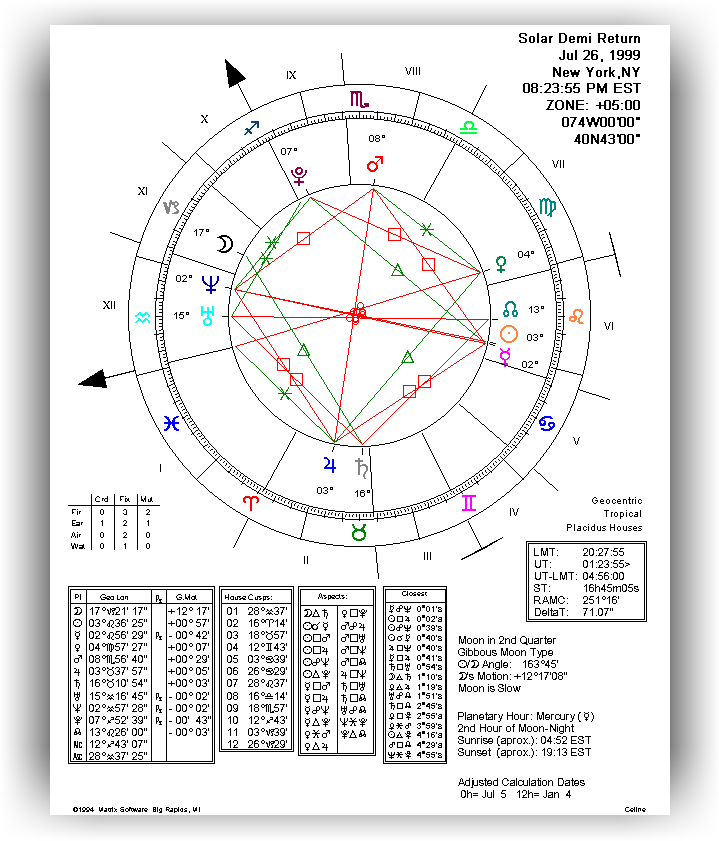 The Incremental feature calculates the return for a specified angle (rather than the conjunction).
[ TOP ]
Synastry Charts A few Samples
Synastry refers to the comparison of two natal charts to establish the potential nature of the relationship between two individuals. Win*Star offers seven Synastry options.
Synastry Chart
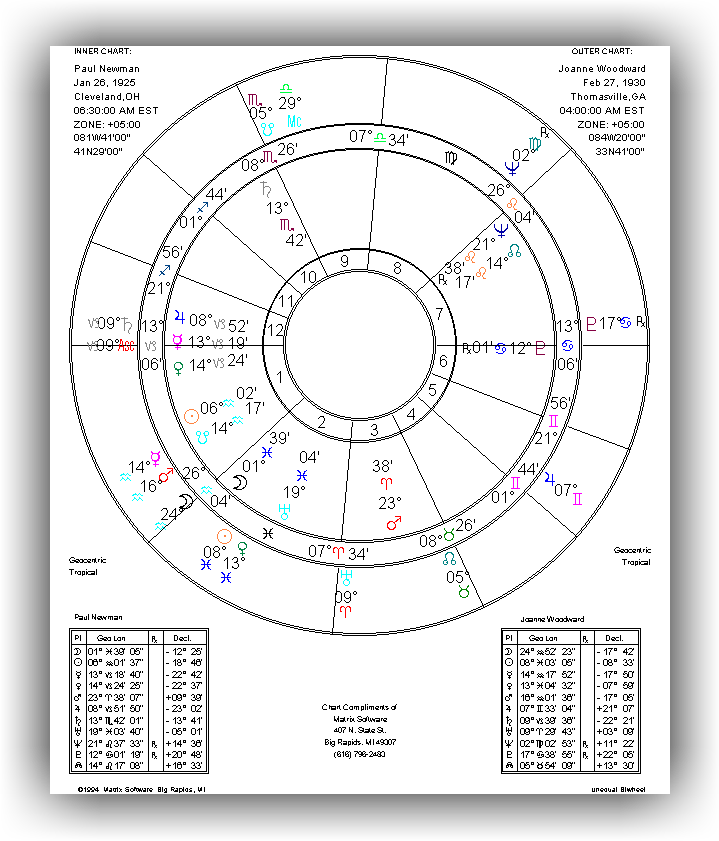 This unequal-house wheel presents aspect lines from the inner chart to the outer chart, providing for comparison analysis.
Composite Chart
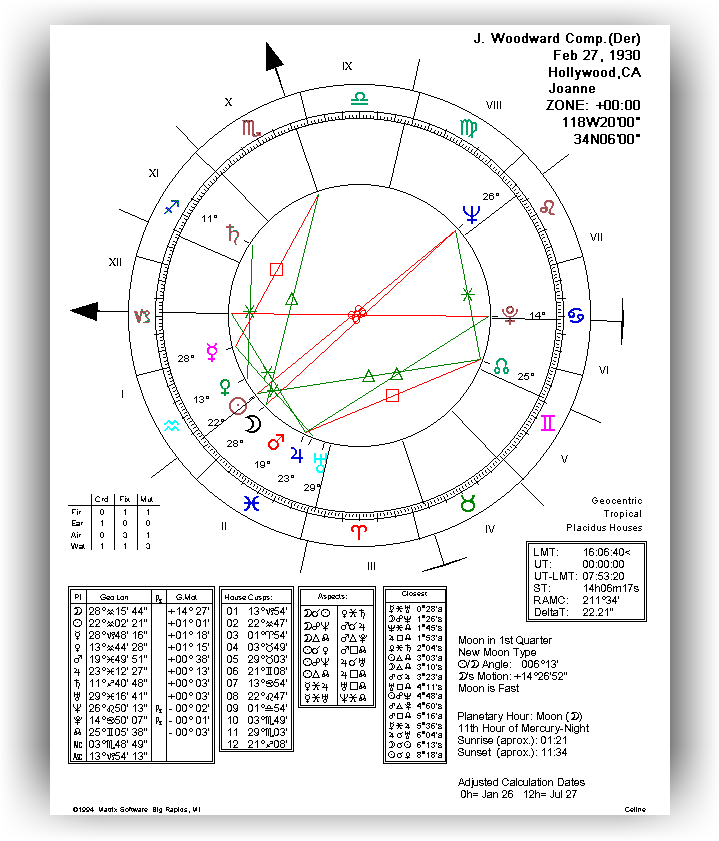 This chart represents the relationship between two individuals based on their combined (composite) midpoints.
Synastry Grid
 The SynGrid (Synastry Aspect Grid) often accompanies a synastry printout. It provides a comprehensive analysis of the planet and sensitive point aspects which exist between the two sets of chart data.
[ TOP ]
Harmonic Charts A few Samples
English astrologer John Addey is credited for the development and popularity of harmonics, which, among other things, provides a methodology for statistical research in astrology. This technique is used in Cosmobiology, Uranian, and Hindu astrology through both charts and dials.
Natal Chart
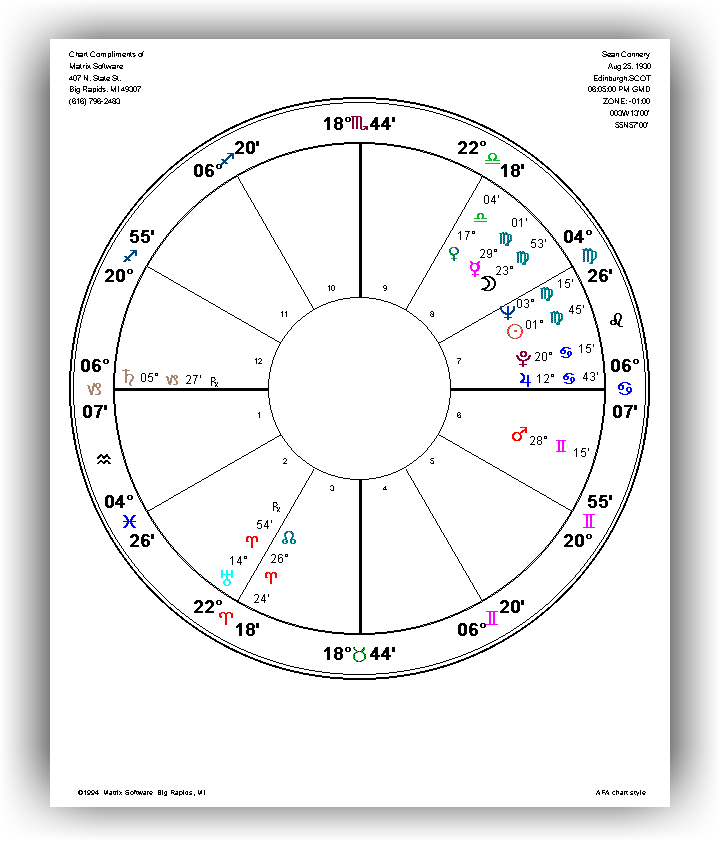 This chart form reflects the Natal planet positions prior to recalculating the charts using one of the Harmonics calculation methods.
Harmonic Chart using 2nd Harmonic
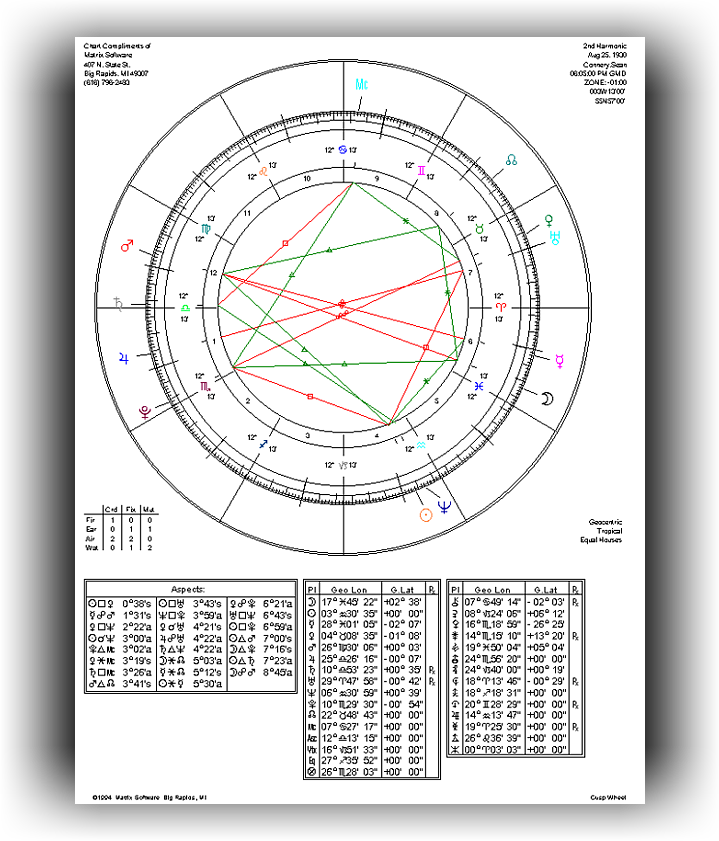 Win*Star 7.0 lets you choose to view a harmonic chart. Options include the 2nd through 12th harmonics (plus the Golden Section, pi, and "e"). Or you can simply type a harmonic in the box.
Arc Transform Chart
 An Arc Transform chart is a type of harmonic chart determined by the angular separation between any two planets in the chart. The way the chart is read depends upon the nature of the two planets chosen. For example, a Sun-Mars arc would be read differently than that of one calculated from the arc of Venus-Neptune or Venus-Pluto.
[ TOP ]
Draconic Charts A few Samples
Draconic charts were popularized by English astrologer Pamela Crane. The Draconic zodiac has its beginning at the moon's north node. The north node is sometimes called the dragon's head (derived from the Latin draco, meaning serpent or dragon, hence the term draconic.) Win*Star 7.0 allows the draconic chart to be calculated from whichever node the natal chart has – either true or mean.
Natal Chart
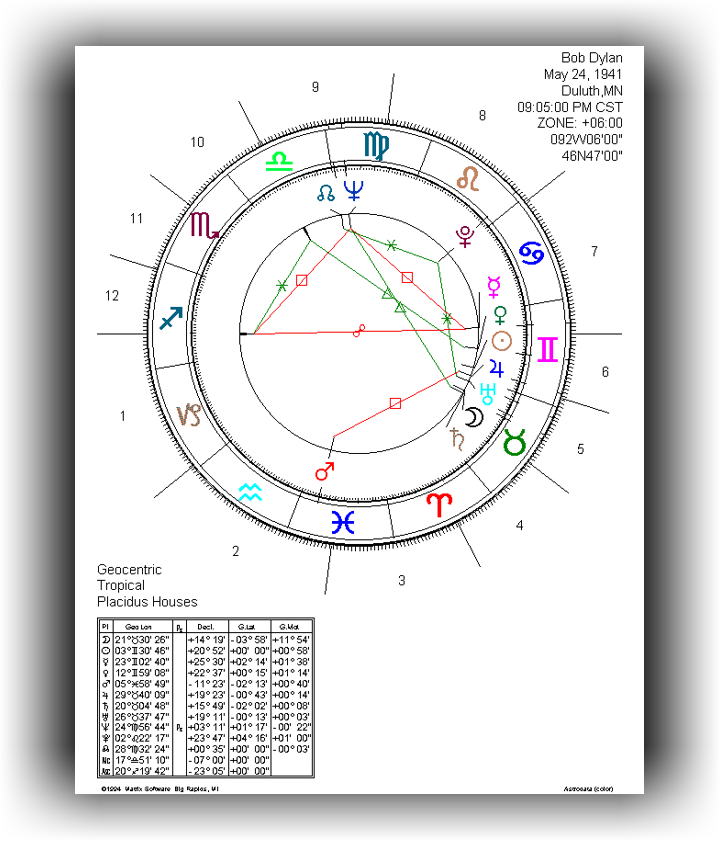 This chart form reflects the Natal planet positions prior to recalculating the chart using the Draconic calculation method.
Draconic Chart
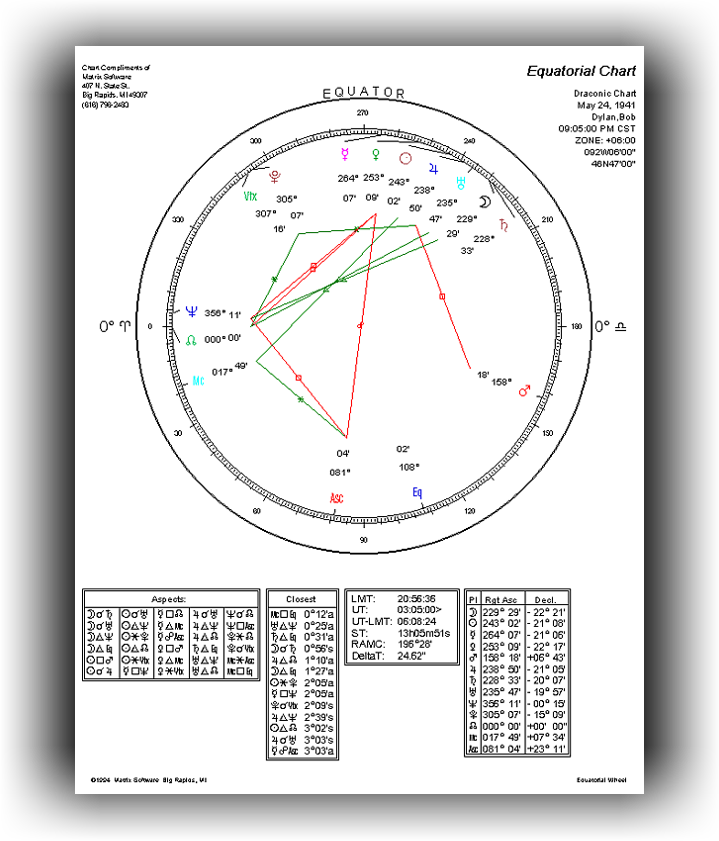 This chart reflects how the node (the ascending node) becomes the zero point or "draconic equinox."
[ TOP ]
Geodetic Charts A few Samples
In the geodetic chart the house cusps are calculated with respect to the birth longitude and latitude, but not the actual birth time. Each degree of geographic longitude is understood to correspond to a specific degree of the zodiac, which in turn serves as the midheaven of any chart calculated for that degree of longitude. From that midheaven, the ascendant and intermediary house cusps of the chart are then derived.
Natal Chart
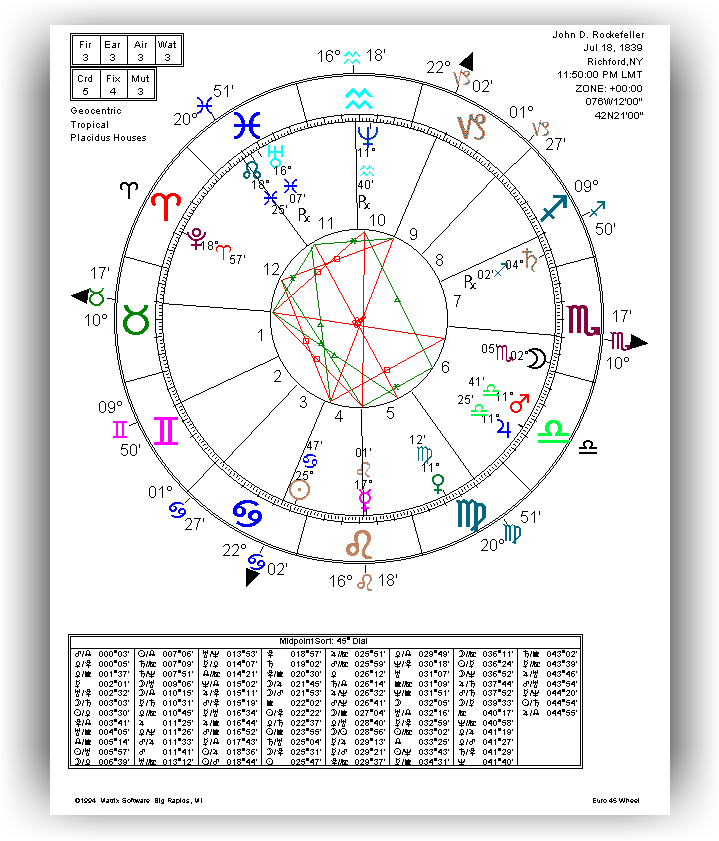 This chart form reflects the Natal planet positions prior to recalculating the chart using the Geodetic calculation method.
Geodetic Chart
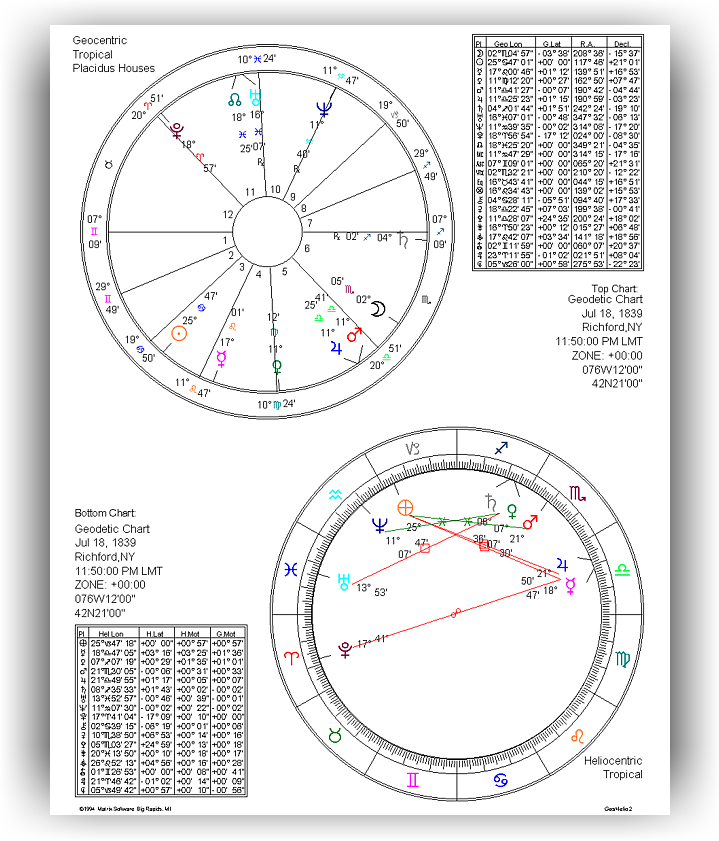 Charts relocated geodetically are used in mundane astrology and figure prominently in current earthquake research.
[ TOP ]
Relocation Charts A few Samples
Relocation is based on the concept that the planets' orientation to the house cusps is based upon geographical location. A relocation chart is calculated by simply casting house cusps for the new location, using the GMT of birth. Planet-cusp orientations for places other than the birthplace indicate the type of events and different spheres of life that would be in high focus at these locations.
Natal Chart
 This chart form reflects the Natal planet positions prior to recalculating the chart using the Relocation calculation method.
Relocated Chart
 A Relocation chart showing that the zodiacal positions of the relocated planets do not differ from their original positions, but the new house cusps can differ dramatically.
[ TOP ]
Planet Cusp Charts A few Samples
In the geodetic chart the house cusps are calculated with respect to the birth longitude and latitude, but not the actual birth time. Each degree of geographic longitude is understood to correspond to a specific degree of the zodiac, which in turn serves as the midheaven of any chart calculated for that degree of longitude. From that midheaven, the ascendant and intermediary house cusps of the chart are then derived.
Natal Chart
 This chart form reflects the Natal planet positions prior to recalculating the chart using the Planet Cusp calculation method.
Planet Cusp Charts
 Many astrologers use a solar chart along with a natal chart calculated with the accurate birth time, to enhance a session with a client.
[ TOP ]
Next Common Feature: Wheels & Grids >